
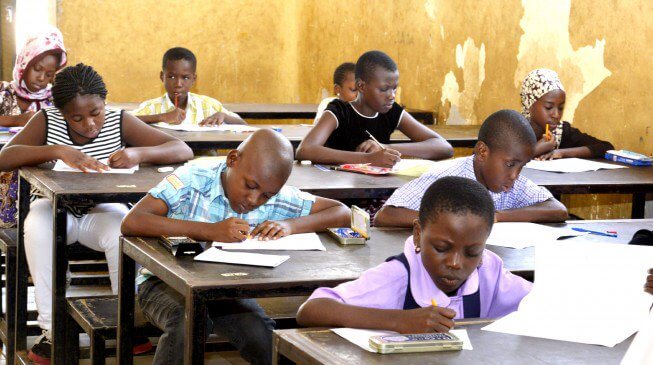
Stakeholders in Nigeria’s education sector have called for immediate and comprehensive reforms to ensure that neurodiverse learners and children living with disabilities have equal access to quality education across the country.
The call was made on Monday during a press conference held at The Learning Place Centre in Lekki, Lagos, ahead of the National Inclusion Conference Nigeria scheduled to take place from May 29 to 30 in Victoria Island, Lagos.
The conference is themed, “Embedding Inclusive Excellence: Supporting Neurodiverse Learners in Every Class.”
Speakers at the event stressed that inclusive education should go beyond policies and isolated initiatives, urging the government and educational institutions to establish a nationwide culture of inclusion supported by adequate funding, teacher training, policy implementation, and institutional reforms.
President of the International Forum of Inclusion Practitioners, Daniel Sobels, said inclusive education must become a national priority because many children are currently denied opportunities due to neurological, social, and economic barriers.
According to him, no child should be excluded from learning opportunities because of developmental or learning differences.
Sobels explained that neurodiverse learners are often misunderstood within traditional school systems and wrongly labelled as incapable or unintelligent.
Neurodiverse learners include individuals with conditions such as autism, dyslexia, ADHD, dyspraxia, and other developmental or learning differences that affect how they process information, communicate, and interact socially.
He noted that such learners require supportive learning environments, tailored teaching methods, and specialised interventions to thrive academically and socially.
Sharing his personal experience as a neurodiverse learner, Sobels recounted how he struggled in school after being labelled lazy and unintelligent because his learning needs were not properly understood.
He emphasised that inclusion should not remain limited to a few specialised schools or centres but should evolve into a nationwide educational movement.
Director of Wholehearted Learning, Sharon Gray, stated that many Nigerian schools are willing to adopt inclusive practices but lack adequate funding, tools, and trained personnel needed to implement them effectively.
Gray urged the government to support inclusive education through policies, funding, and specialised teacher training programmes.
She also advocated the introduction of compulsory inclusion studies in universities and teacher-training institutions to better prepare educators for diverse classrooms.
Former National Executive Director of the National Inclusion Conference, Angelina Ikeako, said many children merely attend school without receiving meaningful education because schools lack proper accommodations and support systems for neurodiverse learners.
According to her, the conference seeks to promote advocacy, awareness, capacity building, and long-term systemic reforms within Nigeria’s educational system.
She stressed the need for a “360-degree approach” involving policymakers, educators, school administrators, and parents in creating inclusive learning environments.
Executive Director of The Learning Place Centre, Bolanle Adewale, described inclusion as a fundamental human right recognised by global bodies such as the United Nations and UNESCO.
Adewale maintained that every child has the capacity to learn and that inclusive education benefits all students, not just neurodiverse learners.
Project Lead of the National Inclusion Conference, Oluwatosin Oladipo, noted that the attitude of adults around children significantly influences how neurodiverse learners perceive themselves and their abilities.
She explained that when teachers and caregivers believe in a child’s potential, the child is more likely to develop confidence and succeed.
Centre Coordinator at TLP Centre, Doyinsola Jawando-Adebomehin, highlighted the importance of parental involvement and collaboration between schools, healthcare professionals, and caregivers in supporting children with learning differences.
She stated that parents understand their children best and should play active roles in developing support strategies for them.
Also speaking at the event, Communication Lead at Golden Educational Consultants, Olusola Imoru, pointed out the shortage of trained special-needs educators in Nigeria.
Imoru explained that many schools struggle to recruit qualified professionals capable of supporting neurodiverse learners effectively and called on universities and government institutions to strengthen special-needs education programmes to address the gap.