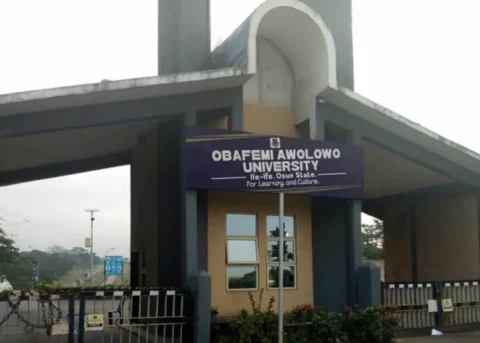


Students of Obafemi Awolowo University, Ile-Ife, Osun State, staged a protest over ongoing difficulties in moving around campus, accusing the institution’s management of poorly handling the transportation system.
The students linked the challenges to the recently introduced transport arrangement involving vehicles donated by Oluremi Tinubu, stating that the system has made it harder for them to attend lectures and carry out daily academic activities.
In response, the Students’ Union announced a 72-hour lecture boycott as a form of protest. The action, scheduled to take place from Tuesday, April 14 to Thursday, April 16, 2026, was agreed upon following a congress held on April 9, alongside meetings involving key student leadership bodies.
In a statement jointly signed by Students’ Union President, Adelani David, and Secretary-General, Habeeb Oke, the union explained that the decision was driven by weeks of growing frustration over transportation issues that have disrupted movement and academic engagement on campus. The statement directed students to boycott all academic activities within the specified period.
Students expressed concerns that the current transport system has worsened commuting conditions, pointing to a shortage of vehicles, overcrowding, extended waiting times, and limited route coverage. They added that those living off-campus are particularly affected, as they now depend on fewer and more expensive transport alternatives outside the university’s system.
According to the union, several attempts to engage the university management have not resulted in immediate improvements, despite assurances that the system is still in a transitional phase.
Among the demands raised by the students are the deployment of more vehicles to cater to the university’s large student population, a temporary return to the previous transport arrangement, and proper consultation with student representatives before implementing further changes. They also called for a more flexible and inclusive transport model that reflects the movement needs of students both on and off campus.
The union warned that failure to address these concerns within the 72-hour period could lead to more intensified actions, including a possible mass protest.
The situation follows the donation of 80 compressed natural gas buses and tricycles to the university by the First Lady, an initiative aimed at improving mobility for students and staff. However, the university’s subsequent decision to restrict movement within campus to only the donated vehicles, while initially seen as a step toward modernization, has reportedly created operational challenges.
Earlier, the Students’ Union acknowledged the intervention but maintained that poor implementation has led to long queues, delays, and insufficient transport capacity, particularly during peak hours. They also raised concerns about the removal of commercial transport operators who previously supported movement across parts of the campus.
University authorities had described the current phase as a “teething period” and assured students that additional buses would be introduced over time to improve the system. However, many students insist that the current conditions remain difficult, prompting the ongoing protest and boycott.
Efforts to reach the university’s Public Relations Officer, Abiodun Olarewaju, for comments were unsuccessful at the time of filing this report.