

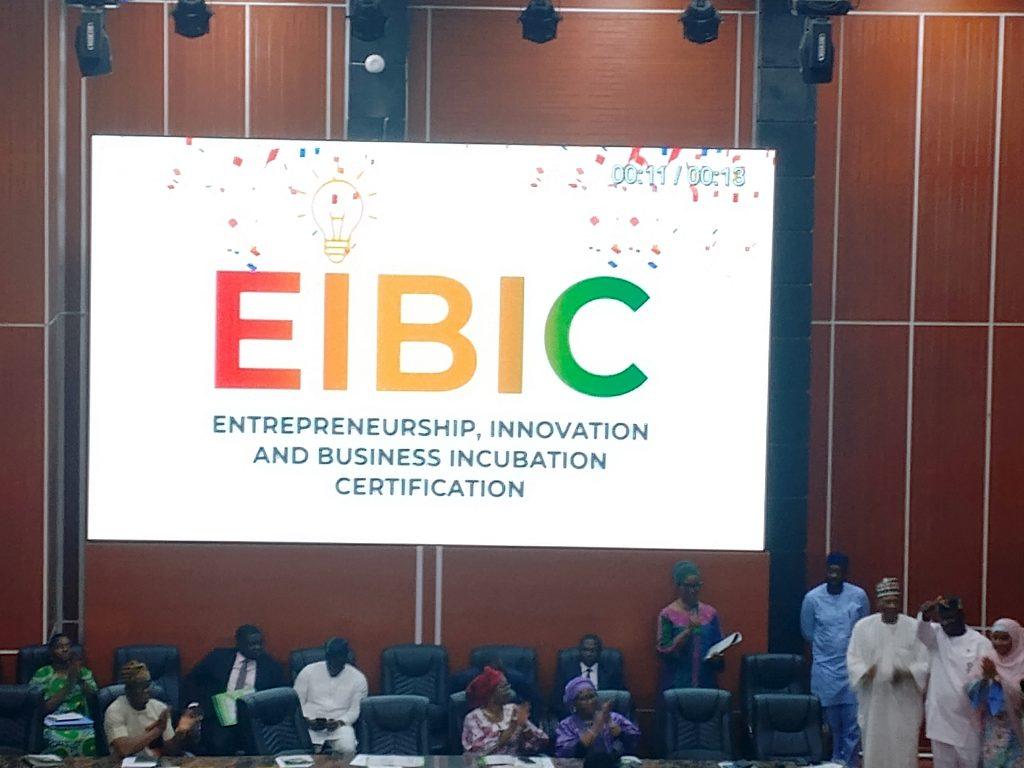
The Federal Government has introduced the Entrepreneurship, Innovation and Business Incubation Certification (EIBIC) programme, making it mandatory for students in selected universities to graduate with an additional entrepreneurship certificate alongside their academic degrees.
The Minister of Education, Dr. Olatunji Alausa, unveiled the initiative on Friday in Abuja, describing it as a major reform aimed at transforming Nigeria’s tertiary education system and preparing students to become job creators rather than job seekers.
According to the minister, the programme will be implemented in phases, beginning with 14 federal universities. It is expected to expand to all federal universities by 2027 and later cover all federal tertiary institutions across the country by 2028.
The universities selected for the pilot phase include the University of Lagos, Ahmadu Bello University, University of Jos, Bayero University Kano, Usmanu Danfodiyo University, University of Benin, University of Port Harcourt, Obafemi Awolowo University, University of Ibadan, University of Maiduguri, Abubakar Tafawa Balewa University, University of Nigeria Nsukka, Nnamdi Azikiwe University, and the University of Abuja.
Alausa explained that the EIBIC programme was designed to address the shortcomings of conventional entrepreneurship courses while aligning Nigeria’s education system with evolving global trends in technology, employability, and labour market demands.
He noted that the initiative signals the beginning of a new direction in the country’s education sector. According to him, failing to adequately prepare young people for modern economic realities would widen the gap between education and employment opportunities.
The programme integrates entrepreneurship training across all academic disciplines, including engineering, medicine, sciences, and the creative arts, with a strong emphasis on innovation and practical problem-solving.
Under the framework, students will receive early exposure to entrepreneurship at the 100 level, followed by progressive skill development at the 200 and 300 levels, before advancing to business incubation and venture creation in their final year.
The minister cited the University of Lagos as an example of the programme’s impact, revealing that eight out of the ten startups from the institution that reached the final stage of the Student Venture Capital Grant had previously participated in the EIBIC programme.
He also directed the vice-chancellors of the participating universities to secure Senate approval for the programme’s full adoption before the end of April.
Emphasising the urgency of the reform, Alausa stated that the government is committed to delivering practical opportunities for Nigerian youth.
The minister further disclosed that the recently launched Student Venture Capital Grant attracted more than 36,000 applications nationwide, from which 63 finalists are expected to receive funding.
He explained that the initiative is supported by the Bank of Industry, which has secured a $50 million grant to support venture financing and may provide up to ₦1 billion in low-interest credit to assist student-led businesses.
Alausa reiterated that under President Bola Ahmed Tinubu’s Renewed Hope Agenda, education remains central to building a knowledge-driven and innovation-led economy.
He added that with sustained reforms in the education sector, Nigerian students will be able to complete their academic programmes on schedule while graduating with stronger skills to navigate modern economic challenges.
Stakeholders at the launch event, including government officials, university administrators, and student representatives, welcomed the initiative.
Special Assistant to the President on Students’ Engagement, Hon. Sunday Asefon, commended the government’s commitment to innovation-driven reforms, stating that Nigerian students are encouraged when policies are both launched and implemented effectively.
He also praised the minister for expanding access to international academic partnerships and strengthening entrepreneurship education in universities.
The Vice-Chancellor of the University of Jos, Professor Tanko Ishaya, described the EIBIC initiative as a well-structured pathway for nurturing job creators and aligning education with practical economic opportunities.
According to him, the programme focuses on equipping students with essential skills in entrepreneurship, innovation, and business incubation, which will help produce a new generation of innovators, industry leaders, and problem-solvers.
The EIBIC programme aims to provide students with hands-on entrepreneurial training, innovation strategies, and structured startup incubation. Through the initiative, students will begin entrepreneurship exposure in their first year and progress through practical training until graduation, earning a second certification that strengthens both employability and entrepreneurial readiness.