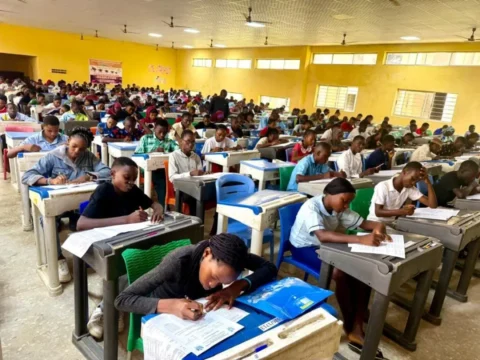

The United Nations Children’s Fund (UNICEF) and the European Union (EU) have unveiled a €1 million humanitarian intervention aimed at restoring access to education for thousands of children affected by conflict and displacement in Sokoto State.
The programme, funded through the EU’s humanitarian arm, European Civil Protection and Humanitarian Aid Operations (ECHO), is expected to benefit more than 20,000 children aged between five and 17 years across internally displaced persons (IDP) camps and host communities in the state.
The 24-month initiative is designed to return out-of-school children to classrooms, provide remedial learning for those already enrolled, improve school sanitation facilities, and offer psychosocial support to children traumatised by violence and displacement.
Speaking during the launch in Sokoto on Thursday, Head of ECHO in Nigeria, Alexandre Castellano, stressed the long-term impact of disrupted education, noting that conflict should never determine a child’s future.
“No child should have their future determined by conflict. When learning stops, the consequences can last a lifetime,” he said. “Through this partnership, the European Union and UNICEF will help communities protect their children, enable them to learn in safe spaces, and reclaim their right to education.”
UNICEF Representative in Nigeria, Wafaa Saeed, also highlighted the urgency of the intervention, warning that ongoing insecurity continues to limit learning opportunities for children in the region.
She said, “As insecurity threatens learning opportunities for thousands of children in Sokoto State, this initiative will ensure that affected children can continue their education and build the life skills they need for a brighter future.”
Sokoto State, like several others in Nigeria’s North-West, has faced repeated security challenges including bandit attacks, village raids, and kidnappings, which have forced many families to flee their homes and disrupted access to essential services such as education and healthcare.
The crisis has further deepened the region’s education challenges, where poverty, weak infrastructure, and social barriers have already contributed to a high number of out-of-school children.
Under the new intervention, teachers will be trained in crisis-sensitive teaching methods, while child-friendly learning spaces will be established to support children’s recovery, safety, and education.
The programme will also strengthen community-led school enrolment campaigns, improve emergency education coordination at state and local government levels, and enhance preparedness systems to ensure learning continues during future emergencies.
Development partners say the initiative is not only aimed at returning children to school but also at building long-term resilience in communities repeatedly affected by insecurity and displacement.