

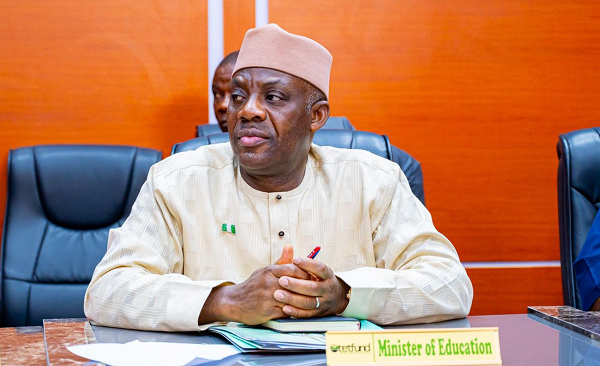
The Federal Government has announced plans to introduce a Learner Identification Number (LIN) for school children starting from the primary school level as part of efforts to track their academic progress throughout their education journey.
The Minister of Education, Tunji Alausa, disclosed this during an interactive session with journalists in Lagos, noting that the initiative is aimed at strengthening monitoring within the education system and increasing the number of pupils who successfully transition from basic education to senior secondary school.
According to the minister, Nigeria currently has more than 50,000 public primary schools with over 23 million pupils enrolled. However, statistics indicate that only slightly above 3 million pupils progress to the junior secondary school level within public schools.
He noted that this large gap raises serious concerns about where millions of pupils go after completing primary education, adding that it is unlikely that private schools absorb all of them.
The minister explained that the challenge is largely due to limited access to secondary education, stressing that more schools need to be built to accommodate the growing number of students. He added that discussions have already been held with the Nigerian Governors’ Forum to encourage state governments to expand educational infrastructure.
To improve tracking and accountability within the system, the government plans to assign a unique Learner Identification Number to every pupil from the primary school level. The number will remain with the child throughout their education, even if they transfer between schools.
He explained that the system will enable authorities to identify students who fail to progress to the next level of education and investigate the reasons behind the interruption in their schooling.