
The Federal Government has earmarked a substantial share of its proposed ₦2.4 trillion education budget for the 2026 fiscal year to universities, signaling renewed efforts to strengthen tertiary education and upgrade learning infrastructure nationwide.
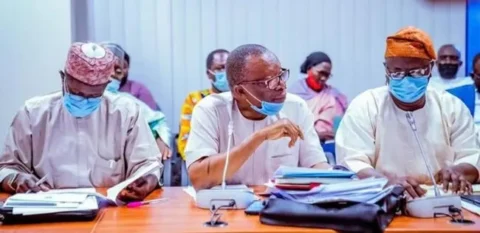
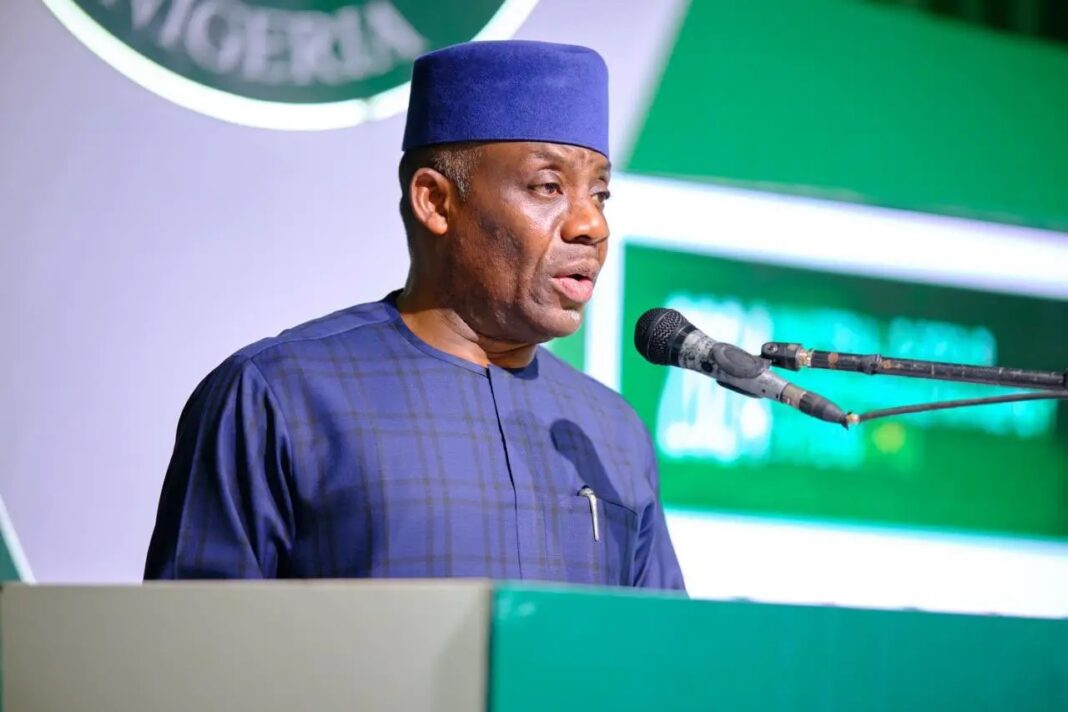
Minister of Education, Dr. Maruf Tunji Alausa, made this known while defending the Ministry’s 2026 budget proposal before the Joint Committees on Education of the National Assembly. He reaffirmed the administration’s commitment to transparency, accountability, and the completion of ongoing projects across the education sector.
In a statement issued in Abuja by the Ministry’s Director of Press and Public Relations, Mrs. Boriowo Folasade, it was disclosed that the Minister was accompanied by the Minister of State for Education, Professor Suwaiba Said Ahmad; the Permanent Secretary, Mr. Abel Eniitan; and other senior officials of the Ministry.
While presenting the budget estimates during the review of the 2025 budget performance and consideration of the 2026 projections, Alausa explained that rollover provisions were incorporated to ensure continuity and timely delivery of critical projects nationwide. He emphasized that financial allocations must translate into measurable improvements in teaching standards, research output, and institutional learning environments.
According to the proposed breakdown, universities are set to receive ₦966.9 billion — the highest allocation within the education sector. Polytechnics and colleges of education have been allocated ₦382 billion, while education parastatals are to get ₦633.3 billion. The Ministry’s headquarters operations are projected to receive ₦257.9 billion.
Federal Unity Colleges are allocated ₦155 billion, while ₦10.3 billion has been provided to meet Nigeria’s international obligations, including contributions to UNESCO.
The Minister acknowledged setbacks in capital project execution during the 2025 fiscal year but noted that performance improved in personnel and overhead expenditures.
He stated that the 2026 budget framework places emphasis on infrastructure expansion, research development, teacher training, digital learning initiatives, and improved safety within schools.
Alausa also raised concerns over a deficit of more than 3,500 teachers in Federal Unity Colleges, particularly in science, mathematics, and technical disciplines. He assured lawmakers that targeted recruitment and retention strategies have been prioritised to bridge the gap.
He further disclosed that the proposed expansion of Technical and Vocational Education and Training (TVET) programmes aims to equip over five million Nigerian youths with employable and entrepreneurial skills.
Outlining the Ministry’s six-point education renewal agenda, the Minister highlighted priorities including advancement in Science, Technology, Engineering, Mathematics, and Medical Sciences (STEMM); reduction in the number of out-of-school children; promotion of girl-child education; accelerated digital transformation; enhanced data-driven planning; and strengthened community engagement.
He added that the Ministry’s 2026–2028 deliverables are aligned with President Bola Ahmed Tinubu’s Renewed Hope Agenda and the broader Education Sector Roadmap.
Speaking during the session, Co-Chairman of the Joint Committee and Chairman of the Senate Committee on Education, Senator Muntari Dandutse, underscored the National Assembly’s constitutional responsibility to scrutinize budget implementation to ensure prudent use of public funds.
Similarly, Chairman of the House Committee on Education, Abubakar Hassan Fulata, alongside Deputy Chairman of the Senate Committee on Education, Senator Babagida Hussain, requested detailed nominal rolls and Internally Generated Revenue (IGR) records from the Ministry and its agencies to guarantee compliance with constitutional requirements.
In response, the Minister assured lawmakers that all requested documents, including nominal rolls and comprehensive IGR expenditure plans, would be promptly submitted to support legislative oversight.
At the end of the deliberations, the Joint Committees received and adopted the Ministry’s submission for further legislative action, with supplementary documentation to be transmitted through the Permanent Secretary.
Alausa reaffirmed the Ministry’s readiness to sustain collaboration with the National Assembly to ensure effective execution of the 2026 education budget and improved service delivery across the sector.