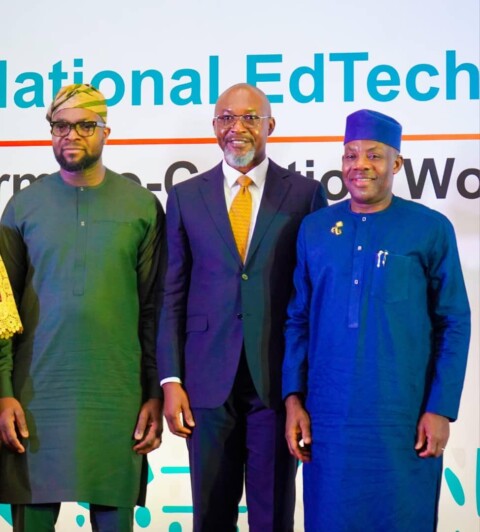


The Minister of Education, Dr. Maruf Alausa, has urged a far-reaching transformation of Nigeria’s polytechnic education system, stressing innovation, good governance, and sustainability as essential pillars for national development.
He made the call on Wednesday in Abuja at a retreat organised by the Conference of Heads of Polytechnics, Colleges of Education and Related Institutions for council chairmen, commissioners of education, rectors, registrars and bursars.
Speaking on the theme, “Transforming Polytechnic Education in Nigeria: Innovation, Good Governance and Sustainability for National Development,” Alausa described polytechnics as vital engines of practical innovation and economic resilience. He noted that they play a crucial role in translating skills into sustainable development outcomes for the country.
The minister said the Federal Ministry of Education is prioritising the revitalisation of Technical and Vocational Education and Training, with a strong emphasis on equipping graduates with hands-on, industry-relevant skills. According to him, current policies are aimed at producing polytechnic graduates who are innovative, adaptable and capable of contributing meaningfully to national growth.
Alausa called on polytechnic leaders to strengthen entrepreneurship and research initiatives, urging institutions to establish functional entrepreneurship centres, research hubs and industry partnerships that can transform ideas into marketable products and businesses. He identified key focus areas to include renewable energy, agricultural technology, digital manufacturing and climate-resilient solutions.
On institutional governance, the minister stressed the need for transparency, accountability and ethical leadership. He warned against conflicts of interest, mismanagement of resources and favoritism in appointments and promotions, insisting that the era of impunity in educational institutions must end. He said fiscal discipline, regular audits and zero tolerance for corruption were necessary to rebuild public trust and attract investment.
He also emphasised the importance of sustainable funding through Internally Generated Revenue and reduced reliance on imports, while acknowledging persistent challenges such as funding shortfalls, obsolete facilities and societal bias that favours university degrees over technical qualifications.
Despite these challenges, Alausa expressed confidence in sustained government backing, noting that under President Bola Tinubu’s Renewed Hope Agenda, the sector would benefit from policy reforms, infrastructure upgrades and strategic partnerships. He further announced a special TETFund intervention to equip polytechnic engineering schools with modern facilities, similar to recent interventions in medical colleges.
In his remarks, the Chairman of COHEADS, Dr. Sani Tunga, described the retreat as timely, given the strategic importance of polytechnic education to Nigeria’s development agenda. He said the theme reflected the realities confronting polytechnics and colleges of technology, which he described as critical to producing skilled and entrepreneurial manpower.
Tunga noted that polytechnics are central to Nigeria’s diversification drive, unemployment reduction efforts and the attainment of the Sustainable Development Goals, but continue to face challenges including inadequate funding, outdated infrastructure, evolving industry demands, governance gaps and sustainability issues.
He also highlighted recurring conflicts within the system, particularly between governing councils and management, as well as between management and staff unions such as ASUP, SSANIP and NASU. According to him, these disputes, often linked to policy interpretation, resource allocation and welfare concerns, can disrupt harmony and slow institutional progress.
Tunga stressed the need for continuous dialogue among key stakeholders to resolve disputes constructively. He explained that the retreat was designed to explore innovative approaches to curriculum development, research and industry collaboration, strengthen governance and accountability, enhance financial sustainability and address the root causes of conflicts in the sector.
He linked the success of the polytechnic system directly to national development, saying a vibrant sector would empower young people, strengthen local industry, promote self-reliance and position Nigeria as a technological and economic force.
In his opening remarks, the Executive Secretary of the National Board for Technical Education, Professor Idris Bugaje, called for renewed commitment to strengthening technical and polytechnic education, describing recent reforms as a major turning point after decades of neglect.
Bugaje traced the history of technical education in Nigeria, noting that it predates university education but suffered neglect after independence, particularly following the civil war, as universities received greater attention. He highlighted the imbalance in the education system, pointing out that Nigeria has only 153 technical colleges compared to over 15,000 senior secondary schools.
According to him, the situation has begun to improve in the last two years due largely to reforms initiated by the current Minister of Education. He said the NBTE is undergoing a process of reinvention and restructuring as a result of these efforts.
The retreat brought together key leaders in Nigeria’s polytechnic and technical education sector to chart a pathway toward skills-based national development, underscoring a renewed emphasis on practical education, institutional excellence and economic relevance.
Although Nigeria’s polytechnic system has long been recognised as a critical source of technical manpower, its impact has been constrained by years of underfunding, outdated curricula, weak industry linkages and societal preference for university education, contributing to rising youth unemployment and widening skills gaps.