
Following the conclusion of the renegotiated 2009 FGN–ASUU Agreement, Nigerians are awaiting the official signing of the pact between the Federal Government and the Academic Staff Union of Universities (ASUU), a move widely expected to restore lasting stability to public universities.
The proposed signing, scheduled for January 14, 2026, is seen as one of the most critical developments likely to shape Nigeria’s education sector in the coming year. It marks the end of a protracted renegotiation process spanning more than 16 years, centred on lecturers’ welfare, university funding, autonomy, and the unchecked proliferation of universities.
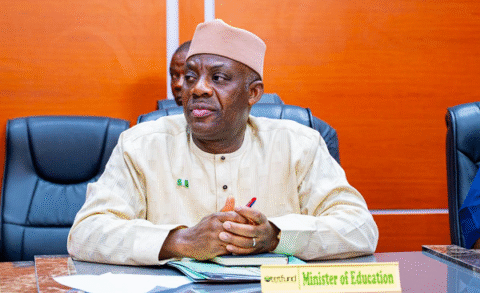
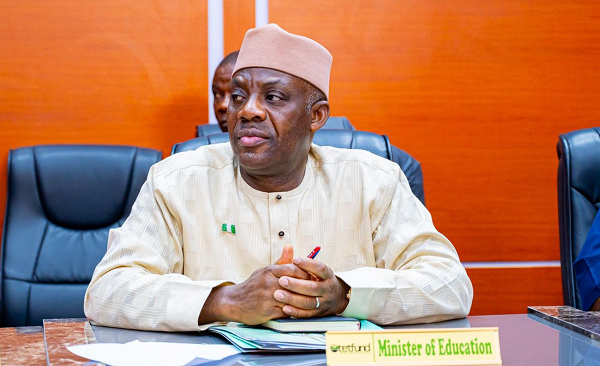
ASUU leadership confirmed the conclusion of the renegotiation on December 23, 2025, with the Minister of Education, Dr. Olatunji Alausa, subsequently affirming the Federal Government’s readiness to formally sign and implement the agreement.
The outgoing year had been dominated by renewed tensions between ASUU and the government, culminating in a two-week warning strike that was suspended midway following the intervention of a Federal Government negotiation committee led by Ahmed Yayale. During this period, ASUU’s newly elected president, Professor Chris Piwuna of the University of Jos, repeatedly criticised the government over delayed negotiations and unresolved welfare issues.
Among the concerns raised were the non-release of the ₦150 billion revitalisation fund, outstanding salaries linked to the 2022 strike, unpaid entitlements for sabbatical and adjunct staff affected by the Integrated Payroll and Personnel Information System (IPPIS), and unpaid third-party deductions.
However, the concluded agreement introduces sweeping reforms, including a 40 per cent salary increase for academic staff and significantly enhanced pension benefits. Under the new pension structure, professors will retire at 70 years with pensions equivalent to their full annual salaries, addressing a long-standing demand of the union.
The agreement also outlines a revamped funding framework for universities, with dedicated allocations for research, libraries, laboratories, equipment, and staff development. A proposed National Research Development Council will be established to fund research with a minimum of one per cent of Nigeria’s Gross Domestic Product (GDP).
Additional provisions include strengthened university autonomy, enhanced academic freedom, and elected academic leadership at the level of deans and provosts, positions reserved strictly for professors. The agreement also guarantees protection for ASUU members against victimisation arising from their participation in the prolonged struggle.
Speaking on Channels Television’s 2025 in Retrospect, Minister Alausa reiterated the government’s commitment to ending recurrent university strikes and restoring a stable academic calendar. He said the Tinubu administration was determined to ensure that academic programmes run without disruption.
“By January 2026, the 2009 agreement will be signed and fully implemented. This administration does not make empty promises,” the minister said, adding that concrete steps had already been taken to address ASUU’s core demands.
Alausa noted that frequent strikes had forced many students to spend up to six years on four-year programmes, describing the situation as unacceptable. He attributed the current industrial peace in universities to sustained engagement with ASUU and improved sector funding.
On lecturers’ welfare, the minister disclosed that academic staff had already benefited from salary adjustments amounting to about 40 per cent, describing the move as a confidence-building measure. He added that education had received its highest budgetary allocation in the last two years, with funds directed towards classrooms, laboratories, lecture theatres, and workshops rather than administrative infrastructure.
The minister also linked the resolution of ASUU issues to broader reforms across the education sector, including investments in basic education, teacher training, digital learning platforms, and the deployment of smart boards and artificial intelligence tools in schools.
According to him, the government is piloting zero-data education platforms in several states to address challenges of internet access and electricity, allowing teachers and students to access learning materials free of charge.
Looking ahead, Alausa said the signing of the renegotiated agreement would provide a sustainable framework for labour relations in universities and ensure that future disputes are resolved without shutting down campuses.
“With this agreement, ASUU strikes should become a thing of the past. Our students deserve uninterrupted education, and that is what we are committed to delivering,” he said.
Nigeria’s public universities have long struggled with disrupted academic calendars due to repeated ASUU strikes, a challenge the government says it is determined to permanently resolve through the implementation of the new agreement.