
The Federal Government has announced plans to finally sign and implement the long-standing 2009 agreement with the Academic Staff Union of Universities (ASUU) on January 14, 2026, a move aimed at ending recurring industrial actions that have disrupted Nigeria’s public university system for years.
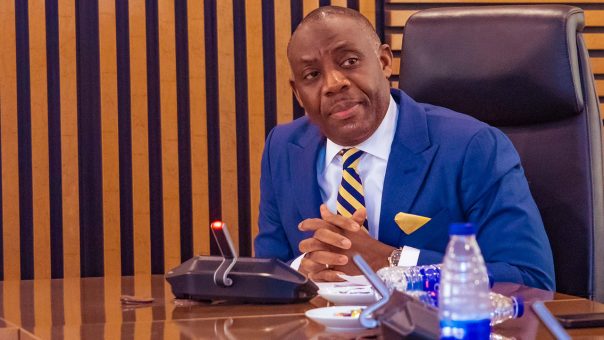
The Minister of Education, Dr. Tunji Alausa, made this known on Wednesday during an appearance on Channels Television’s 2025 in Retrospect, where he stated that the administration of President Bola Ahmed Tinubu is committed to bringing lasting stability to the university academic calendar.
According to Alausa, the decision reflects the government’s resolve to stop frequent strikes that have prolonged students’ years in school beyond the stipulated duration of their programmes. He stressed that students should no longer spend six years on courses meant to last four years due to repeated shutdowns of public universities.
He noted that the cumulative impact of strikes over the years has cost some students nearly four academic years, describing the situation as unacceptable and insisting that uninterrupted learning must be guaranteed.
The minister said the relative industrial harmony currently being experienced in public universities is the result of deliberate engagement with ASUU and improved funding for the education sector, rather than coincidence. He added that lecturers are back in classrooms and students are actively learning due to conscious policy choices by the present administration.
On staff welfare, Alausa revealed that academic staff have benefited from salary increases of about 40 per cent, describing the adjustment as a crucial step toward rebuilding trust and improving the quality of education delivery.
He further disclosed that the education sector has received its highest budgetary allocations in the past two years, with funds directed toward critical infrastructure such as classrooms, laboratories, lecture theatres, engineering workshops and faculty offices across federal universities.
According to him, government interventions are focused on strengthening learning environments rather than expanding administrative structures, noting that major upgrades are ongoing in many universities nationwide.
The minister also linked the resolution of ASUU-related issues to broader reforms in the education sector, including investments in basic education, teacher training and digital learning. He said new classrooms and schools are being constructed across 18 states, laboratories are being upgraded in thousands of schools, and teachers are being retained and retrained using digital platforms.
Alausa revealed that the government is piloting zero-data education platforms in some states to address challenges related to internet access and electricity, enabling teachers and students to access learning materials and conduct online classes at no cost. He added that smart boards are being introduced in primary, junior and senior secondary schools, alongside the use of technology and artificial intelligence to enhance learning outcomes.
Looking ahead, the minister said the signing of the 2009 agreement would establish a sustainable framework for labour relations in the university system, ensuring that future disagreements are resolved without shutting down campuses.
He reaffirmed that the government remains committed to delivering uninterrupted education, stressing that Nigerian students deserve a stable and predictable academic environment.